



Drought
Our scientists are engaged in wide-ranging efforts to address California’s severe drought. This work is helping the state’s fruit and vegetable farmers stretch limited water supplies, rangeland cattle ranchers in need of management information, and urban dwellers seeking water-saving landscape ideas. Other scientists are monitoring the impact of the critical water shortage on our environment. Here are some examples of what we’re doing to make every drop count.

Eduardo Blumwald
Plant scientist Eduardo Blumwald conducts research on plants that can grow with less irrigation water and survive periodic droughts. With colleagues, Blumwald’s laboratory discovered technologies to create drought- and salt-tolerant plants that have since been applied to rice, wheat, maize, and other crop plants. Read more.

Helen Dahlke
Drought has a glaring impact on California’s water supply, but changes in water availability also have an effect on how essential chemical elements such as phosphorous, nitrogen, carbon, and salt cycle through the environment. Helen Dahlke is a hydrologist in the Department of Land, Air and Water Resources who specializes in this area. Read more.
Thomas Harter
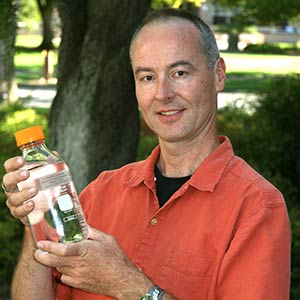
Groundwater, an important source of drinking water for millions of Californians, can be adversely affected by drought when insufficient rainfall fails to recharge aquifers. Specialist Thomas Harter runs the UC Cooperative Extension Groundwater Hydrology Program that works with agriculture and government agencies and groups to manage this resource. Read more.

Jess Jackson Building
The Jess Jackson Sustainable Winery Building, completed last year, will demonstrate how wine and food businesses can operate on a fraction of usual water requirements. According to Professor Roger Boulton, rainwater—collected, cleaned, and reused—will eventually be the sole source of water for the adjacent teaching and research winery. Read more.
Peter Moyle
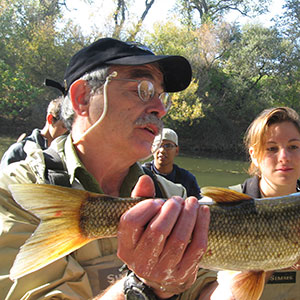
Fish biologist Peter Moyle has monitored California native fish populations through droughts for more than three decades. In a study published in 2013, he and fellow scientists determined that climate change and human-caused degradation to aquatic habitats threatens extinction for 82 percent of California’s native fish. Read more.

Zhongli Pan
Adjunct professor Zhongli Pan, a USDA research engineer, studies new technologies to reduce water usage in food processing. He has worked with the tomato processing industry to find a better way to peel tomatoes with infrared heat, a technique also suitable for other commodities. This work is profiled in our college magazine, CA&ES Outlook. Read more.

Samuel Sandoval Solis
Water resources expert Samuel Sandoval Solis provides technical advice on water conservation to farmers and to local, state, and federal water management agencies. He helps design strategies for water resource challenges, trying to balance the needs of agriculture, industry, the environment, and cities. Read more.

Larry Schwankl
Crops such as almonds, pistachios, stone fruits, walnuts, alfalfa, and olives can be “deficit irrigated” with minimal impact on yield and quality. Irrigation specialist Larry Schwankl has assembled information about crop irrigation strategies and irrigation scheduling on the UC Drought Management website to help farmers use water efficiently. Read more.

Ken Shackel
Ken Shackel’s philosophy about irrigation and drought is simple: “Ask the plant.” He uses a device called a pressure chamber on tree leaves that he likens to taking the blood pressure of humans. The plant scientist meets frequently with tree fruit, nut, and vine growers to advise them on how to save water. Read more.

Ken Tate
California’s 41 million acres of rangeland, which provides livestock forage, wildlife habitat, plant diversity, and clean water, has been hit hard by drought. Specialist Ken Tate and postdoctoral researcher Leslie Roche work with affected ranchers to cope with drought’s impacts. Read about this work at the Rangeland Watershed Laboratory website. Read more.

Shrinivasa Upadhyaya
“Precision agriculture” combines global positioning systems, geographic information systems, unique sensors, and other information technology to make efficient use of inputs, including irrigation water, to grow crops. Professor Shrinivasa Upadhyaya, a leader in this area, is conducting research on precision applications of water in almonds and walnuts. Read more.

UC Davis Arboretum
The UC Davis Arboretum and Public Garden can help urban dwellers manage their landscapes to become more water thrifty. Landscape drought tips and information about upcoming workshops to remove the lawn, irrigate more efficiently, and where to find attractive low-water plants are available at the Arboretum’s website. Read more.
