groundwater

Can Winter Grains Prevent Fallowing Fields?

California’s San Joaquin Valley produces an enormous share of the nation’s fruits, nuts and vegetables. But it takes an unsustainable amount of groundwater to do it. New state rules aimed at reducing groundwater use are expected to force up to 20 percent of the valley’s irrigated fields out of production – a blow to farmers and communities.

California Surface Water Costs Triple During Drought

California often swings between climate extremes — from powerful storms to punishing droughts. As climate change drives more intense and frequent dry and wet cycles, pressure on California’s water supplies grows.

A new University of California, Davis, economic study finds that drought in California pushes the price of water from rivers, lakes and reservoirs up by $487 per acre-foot, more than triple the cost during an average wet year. The research appears in Nature Sustainability.


Growing Crops with Less Groundwater

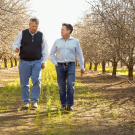
On a warm February afternoon, Kirk Pumphrey walks down his rows of almond trees at Westwind Farms in Yolo County. He notices the buds on the branches have already sprouted pink. It worries him. The earlier the trees bloom, the more likely winter frost will damage the nuts. Early blooms are occurring more often as higher temperatures from climate change stimulate plant growth. 

Study offers insights on reducing nitrate contamination from groundwater recharge

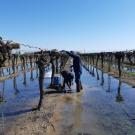
With California enduring record-breaking rain and snow and Gov. Gavin Newsom recently easing restrictions on groundwater recharge, interest in “managed aquifer recharge” has never been higher. This process – by which floodwater is routed to sites such as farm fields so that it percolates into the aquifer – holds great promise as a tool to replenish depleted groundwater stores across the state.