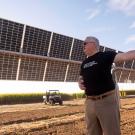
Majdi Abou Najm stands in a tomato crop under the summer sun in UC Davis’s agricultural research fields. A few hours after sunrise, the sun is beginning to feel less like warmth and more like a weight — the kind of heat that could scald tomatoes on the vine.
“If you live in the Central Valley, you realize two things: We don’t have a lot of water, and we have a lot of sun,” said Abou Najm, a soil biophysics professor in the Department of Land, Air and Water Resources.
Placing dairy manure compost on almond orchards can reduce the release of the greenhouse gas nitrous oxide by about 35% while increasing or maintaining crop yields, according to new research from the University of California, Davis.
The findings offer California’s two largest agricultural industries a path toward increased sustainability while maintaining fertilizer use and offering a secondary use for manure.
As the school year wraps up, some students at the University of California, Davis, are celebrating more than their own accomplishments. They’re cheering on the budding scientists they’ve spent months mentoring through UC Davis EnvironMentors.