Wheat

Good News for Pasta Lovers Grows in UC Davis Fields

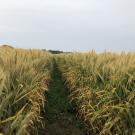
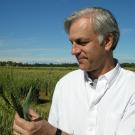
On a sunny day in early April, young wheat plants stood waist-high, their heads full of still-green grain. A walk along some furrows left pants and boots covered with a fine, orange dust. These plants in test fields near the UC Davis campus were bred to fight a stubborn pathogen that threatens the world’s wheat: stripe rust.

Wheat That Makes Its Own Fertilizer

Scientists at the University of California, Davis, have developed wheat plants that stimulate the production of their own fertilizer, opening the path toward less air and water pollution worldwide and lower costs for farmers.

Targeting Gluten: Researchers Delete Proteins in Wheat Harmful to People with Celiac Disease

Wheat is a major source of calories, carbohydrates and protein worldwide and its distinctive gluten proteins are what gives bread and pasta dough texture and elasticity. But it also can cause autoimmune reactions such as celiac disease, which is growing in prevalence worldwide.

Researchers at the University of California, Davis, have deleted a cluster of genes in wheat that generates gluten proteins that can trigger immune reactions without harming the breadmaking quality of this globally nutritious crop.


Russia’s Actions Threaten Global Food Security

The Russian invasion of Ukraine in early 2022 caused wheat and corn prices to spike 30% and 13%, respectively, and threatened a worldwide food crisis. International efforts to mitigate a food security crisis via the Solidarity Lanes and the Black Sea Grain Initiative (BSGI) have successfully allowed grain exports out of Ukraine. However, Russia’s recent withdrawal from the BSGI, coupled with increased bombings of Odesa and Danube River ports, caused another price spike for these grains.

Scientists Unlock Key to Drought-Resistant Wheat Plants with Longer Roots

Growing wheat in drought conditions may be easier in the future, thanks to new genetic research out of the University of California, Davis.

An international team of scientists found that the right number of copies of a specific group of genes can stimulate longer root growth, enabling wheat plants to pull water from deeper supplies. The resulting plants have more biomass and produce higher grain yield, according to a paper published in the journal Nature Communications.

UC Davis to Lead $15 Million Research Into Climate-Change Resistant Wheat

Wheat products account for roughly 20% of what people eat every day around the globe. As climate changes, wheat crops must adapt to new weather patterns to keep up with demand. 

The University of California, Davis, is leading a five-year, $15 million research project to accelerate wheat breeding to meet those new climate realities, as well as to train a new generation of plant breeders. 

UC Davis Team Identifies Wheat Gene that Increases Yield

A team of scientists from University of California, Davis, have identified a new gene variant in wheat that can increase the amount of the grain produced, new research published in the journal PLOS Genetics finds.

Wheat is a staple of food diets worldwide and the gene discovery could allow farmers to grow more food without increasing land use. Increased yield could also lower consumer prices, making the crop more accessible.