Solar

Can Solar Cells Help Crops Grow, Save Water and Create Energy?


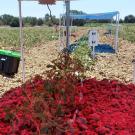
Majdi Abou Najm stands in a tomato crop under the summer sun in UC Davis’s agricultural research fields. A few hours after sunrise, the sun is beginning to feel less like warmth and more like a weight — the kind of heat that could scald tomatoes on the vine. 

“If you live in the Central Valley, you realize two things: We don’t have a lot of water, and we have a lot of sun,” said Abou Najm, a soil biophysics professor in the Department of Land, Air and Water Resources. 

Helping Birds and Floating Solar Energy Coexist

From a small California winery to a large-scale energy project in China, floating photovoltaics — or “floatovoltaics”— are gaining in popularity. Commonly installed over artificial water bodies, from irrigation ponds and reservoirs to wastewater treatment plants, floating solar projects can maximize space for producing clean energy while sparing natural lands.

Harvesting Light to Grow Food and Clean Energy Together

People are increasingly trying to grow both food and clean energy on the same land to help meet the challenges of climate change, drought and a growing global population that just topped 8 billion. This effort includes agrivoltaics, in which crops are grown under the shade of solar panels, ideally with less water.

Now scientists from the University of California, Davis, are investigating how to better harvest the sun — and its optimal light spectrum — to make agrivoltaic systems more efficient in arid agricultural regions like California. 

Cacti and Other Iconic Desert Plants Threatened by Solar Development

Native Desert Plants Important to Indigenous Cultures Especially Vulnerable

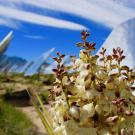
With their tough skins, pointy armor and legendary stamina, cacti are made to defend themselves from whatever nature throws at them. 

But large solar energy facilities are one threat that cacti weren’t built to withstand, according to a study by the University of California, Davis.