climate change

State of the Lake

Annual report looks at Tahoe’s trends and challenges

The UC Davis Tahoe Environmental Research Center has released its annual Tahoe: State of the Lake Report, assessing a year marked by the hottest temperatures on record followed by a winter of unprecedented levels of rain and snow in the Sierra Nevada mountains, where Lake Tahoe resides.

A Climate Change Solution Beneath Our Feet

Healthy soil could change everything

When we think of climate change solutions, what typically comes to mind is the transportation we use, the lights in our home, the buildings we power and the food we eat. Rarely do we think about the ground beneath our feet.

Kate Scow thinks a lot about the ground, or, more precisely, the soil. She’s been digging into the science of how healthy soils can not only create productive farmlands, but also store carbon in the ground, where it belongs, rather than in the atmosphere as carbon dioxide.

Climate Change May Cut Cereal Yield

Technological advances could offset loss

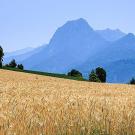
Climate change will likely cause wheat and barley yields to decline by 17 to 33 percent by the end of the century, predicts a new statistical model developed by researchers at the University of California, Davis, and Cornell University.

Freshwater or Saltwater? Why not both?

Researchers find salt-tolerant gene in tilapia

Most fish live either in freshwater or saltwater, but others, including tilapia, have the remarkable ability to physiologically adjust to varying salinity levels — a trait that may be critically important as climate change begins to alter the salinity of ocean and coastal waters as well as the water in desert lakes and creeks.

China’s Shrinking Rice Yield

Ozone pollution threatens rice crop; researchers see hope

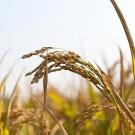
High levels of surface ozone are damaging rice yields at an alarming rate in China, the world’s largest agricultural producer and one of its most polluted nations, report researchers at the University of California, Davis, and in China.

For the first time, the research team identified a specific stage of the rice plant’s development as being vulnerable to ozone pollution, which they warn has the potential to impact the international rice market and compromise global food security.

Secret life of soil

Soil microbes may help fight climate change.

Kate Scow, a professor of soil science and soil microbial ecology at UC Davis, keeps plastic bags filled with soil on her desk.

High and Dry

Aerial tree mortality survey shows patterns.

Why do some trees die in a drought and others don’t? And how can we predict where trees are most likely to die in future droughts?

Scientists from the University of California, Davis, and colleagues examined those questions in a study published in the journal Ecology Letters.  

Grant to Study Datasets

Water-focused project will help policymakers better assess impacts of climate change.

A mid increasing demands for accurate climate projections, a new grant to the University of California, Davis, from the U.S. Department of Energy Regional and Global Climate Modeling Program aims to help make better use of regional climate datasets.