climate change

Fighting Fire in a warmer world

Researchers strive to slow climate change so forests have time to adapt

Fires used to be nature’s way of keeping forests healthy. They would burn slowly through the hills and forests of California every decade or so, clearing out underbrush and making room for more plants to grow and animals to roam. Forest fires seldom claimed mature trees, which were sturdy and hydrated enough to handle the heat.

Maize Genetics May Show How Crops Adapt to Climate Change

Understanding adaption to altitude, climate could be applied to other crops

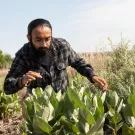
With the onset of climate change and changes in irrigation, adapting food crops to grow in diverse environments could help feed the world. Now University of California, Davis, scientists are leading a major new project, funded by the National Science Foundation with $4.1 million over five years, to study genetic adaptation to different environments in maize.

Frogs That Can Take the Heat Expected to Fare Better in a Changing World

Climate Change May Outpace Deforestation as Habitat Threat in Tropics

Amphibians that tolerate higher temperatures are likely to fare better in a world affected by climate change, disease and habitat loss, according to two recent studies from the University of California, Davis.

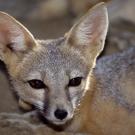
Frogs are disappearing globally, and the studies examine why some survive while others perish. The studies reveal that thermal tolerance — the ability to withstand higher temperatures — may be a key trait in predicting amphibian declines.

See What Scientists Learn From a Big Fire

Making Science Out of Fire at Stebbins Cold Canyon Natural Reserve

The Wragg Fire tore through the UC Davis Stebbins Cold Canyon Reserve in 2015, leaving the area charred. But scientists have approached the aftermath of the fire as an opportunity to study how the reserve's ecosystem responds to fire. What they learn could help western states better understand and prepare for hotter, drier, and longer wildfire seasons.

Livestock and Climate Change

Facts and Fiction on Livestock and Climate Change

As the November 2015 Global Climate Change Conference COP21 concluded in Paris, 196 countries reached agreement on the reduction of fossil fuel use and emissions in the production and consumption of energy, even to the extent of potentially phasing out fossil fuels out entirely.