sustainability

UC Davis, Mango Materials Partner to Advance Affordable Bioplastics from Methane

What if the methane from landfills and wastewater treatment plants could become an affordable raw material for sustainable plastics? 

Some naturally occurring bacteria, called methanotrophs, can consume methane and use its carbon to produce biodegradable plastics, which are stored inside their cells. But producing plastic is only part of the puzzle. Recovering and purifying it from the bacteria contributes significantly to costs; thus, reducing these costs can help make methane-derived bioplastics economically competitive with conventional plastics. 

California a Botanical and Climate Change Hot Spot

From coastal redwoods and Joshua trees to golden poppies and sagebrush, California is a global botanical hotspot. It’s also a place confronted with extreme heat, wildfires and crumbling coastlines. The state’s natural beauty and history of pioneering conservation efforts make it a test bed for protecting biodiversity in the face of current and future climate change, argues a study led by the University of California, Davis. 

Grape Seeds, Stems and Skins in Feed Can Reduce Dairy Cattle Emissions

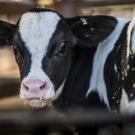
California’s wine industry could play a role in reducing methane emissions from dairy cattle.

Researchers at University of California, Davis, added fresh grape pomace left over from winemaking operations to alfalfa-based feed for dairy cows and found that methane emissions were reduced by 10% to 11%. 

The preliminary findings could offer a low-cost sustainable pathway for vineyards to reduce waste while helping dairy operations maintain quality while cutting back on emissions of methane, which is a powerful greenhouse gas.

How Politics, Society and Tech Shape the Path of Climate Change

Politics and society largely dictate climate policy ambitions and therefore the trajectory of greenhouse gas emissions, yet climate change models and projections rarely include political and social drivers. A study from the University of California, Davis, simulated 100,000 possible future policy and emissions trajectories to identify relevant variables within the climate-social system that could impact climate change in this century. 

A Fixed-Effort Fishery More Sustainable for Economy and Environment

Study Considers Food Web, Extinction Cascades and Human Dynamics

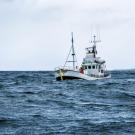
For a truly sustainable fishery, more needs to be considered than just the abundance of the harvested species. Harvesting even abundant species can create indirect extinction cascades down the food web that can harm the long-term economic and ecological sustainability of a fishery. 

That is according to a study from the University of California, Davis, published today in the journal Science Advances. 

The Distance Local Energy Goes to Bring Power to the People

Study Comparing Energy Providers Finds Parallels to Local Foods Movement

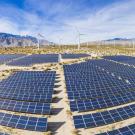
When you go to the grocery store, you can look at an apple and know if it was grown in Chile, Washington or somewhere closer to you by a quick glance at its sticker. But consumers have largely been in the dark when it comes to energy, and how far it has traveled to reach them.