Environment

Solar Development: Super Bloom or Super Bust for Desert Species?

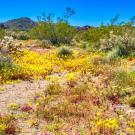
Rare Desert Plants More Sensitive to Solar Development

Throughout the history of the West, human actions have often rushed the desert — and their actions backfired. In the 1920s, the Colorado River Compact notoriously overallocated water still used today by several Western states because water measurements were taken during a wet period.

Finding New Life for Wine-Grape Residue

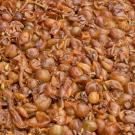
Chardonnay Pomace May Be Rich in Health-Enhancing Compounds

California produces nearly 4 million tons of world-class wine each year, but with that comes thousands of tons of residue like grape skins, seeds, stems and pulp. What if scientists could harness that viticultural waste to help promote human health?

Decarbonizing California Transportation by 2045

by UC Davis News and Media Relations

Report to State Outlines Policy Pathways to Meet the Zero-Carbon Time Crunch

Transportation is the largest source of greenhouse gas emissions in California. In order to achieve the state’s goals of carbon neutrality by 2045 and avoid the worst impacts of climate change, decarbonizing this sector is essential. But such a transition is unlikely to occur rapidly without key policy intervention. 

Water Talk Podcast Launches Season 2: ‘Drought Is Back!’

The UC Davis-affiliated podcast Water Talk launches its second season today, April 2. This season will focus on drought, a water issue at the top of many minds during this relatively dry rainy season. 

“In California, drought is not ‘if,’ it’s ‘when,’” said Water Talk co-host Faith Kearns, academic coordinator with the California Institute for Water Resources.

Feeding Cattle Seaweed Reduces Their Greenhouse Gas Emissions 82 Percent

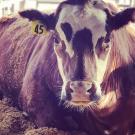
New Long-Term Study Could Mean More Sustainable Burgers

A bit of seaweed in cattle feed could reduce methane emissions from beef cattle as much as 82 percent, according to new findings from researchers at the University of California, Davis. The results, published today (March 17) in the journal PLOS ONE, could pave the way for the sustainable production of livestock throughout the world.

Migratory Birds Track Climate Across the Year

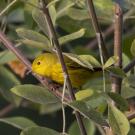
As climate change takes hold across the Americas, some areas will get wetter, and others will get hotter and drier. A new study of the yellow warbler, a widespread migratory songbird, shows that individuals have the same climatic preferences across their migratory range. The work is published Feb. 17 in Ecology Letters.

Arctic Shrubs Add New Piece to Ecological Puzzle

Implications for Carbon Exchange in a Warming, Drying Tundra

15-year experiment on Arctic shrubs in Greenland lends new understanding to an enduring ecological puzzle: How do species with similar needs and life histories occur together at large scales while excluding each other at small scales? The answer to this question has important implications for how climate change might shift species’ distributions across the globe.

Dead Trees Fuel Wildfire Severity in Sierra Nevada

Study Highlights the Role of Forest Fuels Amid a Warming Climate

California’s drought of 2012-2016 killed millions of trees in the Sierra Nevada — mostly by way of a bark beetle epidemic — leaving a forest canopy full of dry needles. A study published from the University of California, Davis, and the U.S. Forest Service helps answer concerns about what effect dense, dead foliage could have on subsequent wildfires and their burn severity. 

Identifying Where to Reforest After Wildfire

A Future of Fewer Christmas Trees? Conifers Expected to Decline

In the aftermath of megafires that devastated forests of the western United States, attention turns to whether forests will regenerate on their own or not. Forest managers can now look to a newly enhanced, predictive mapping tool to learn where forests are likely to regenerate on their own and where replanting efforts may be beneficial.